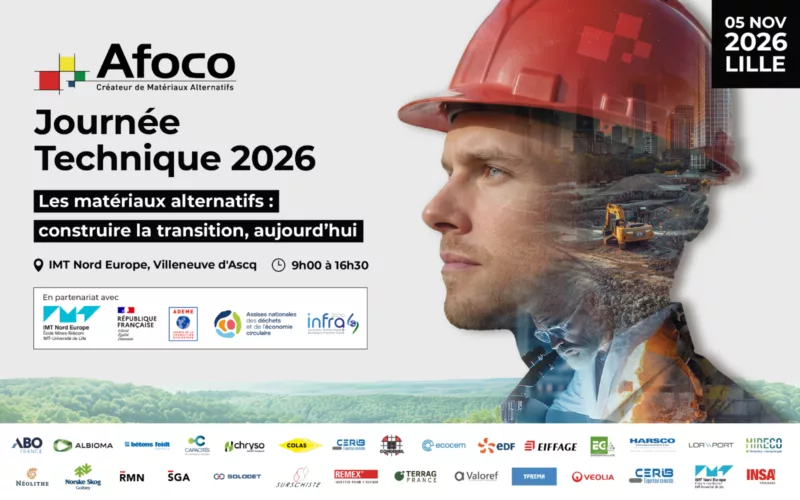
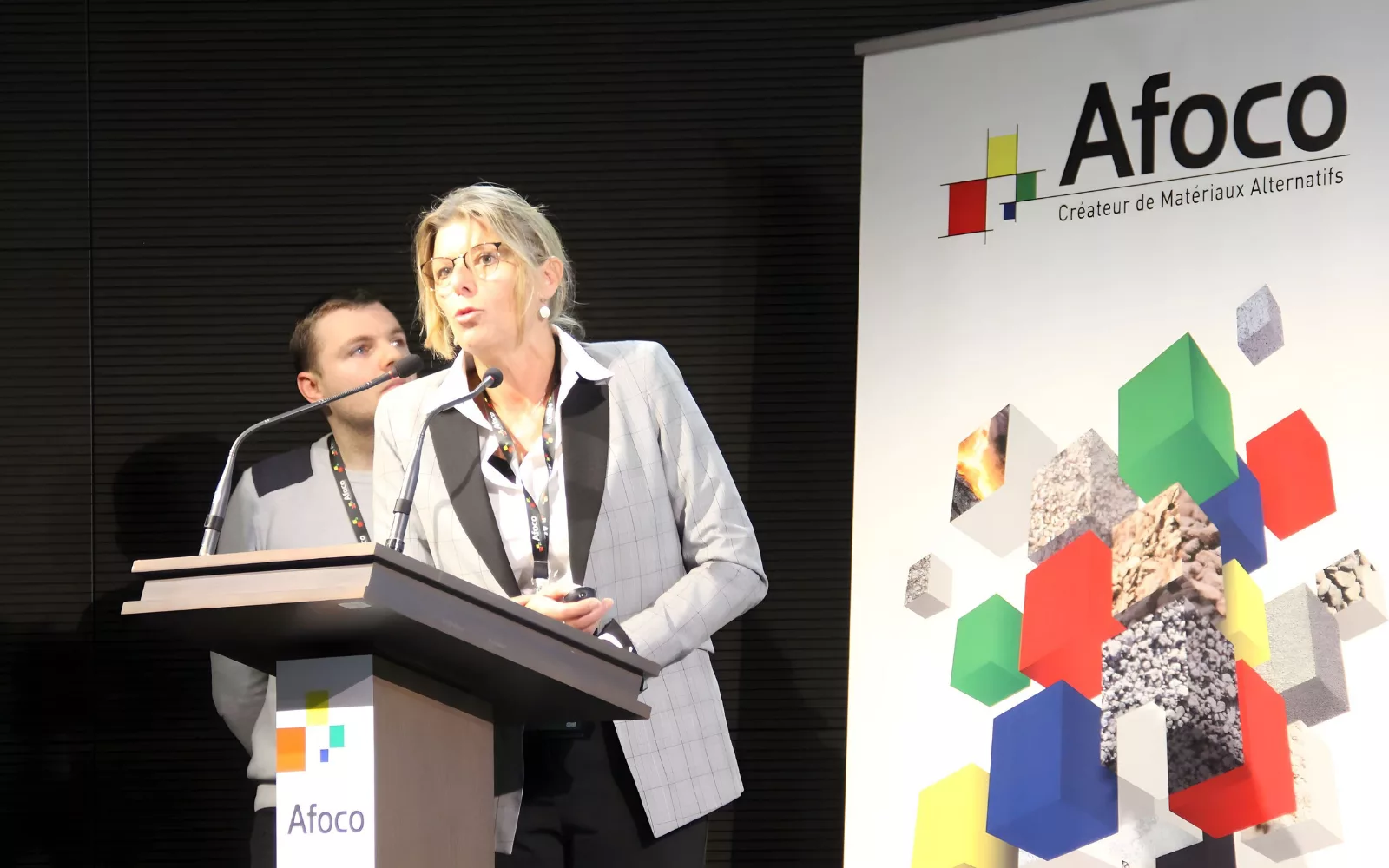
At the AFOCO 2025 Technical Day, Corentin Weber, Industrial Waste Recovery Engineer, Norske Skog Golbey and Séverine Philippe, Technical Director, Terrag France presented an innovative approach: turning ash from the incineration of desinking sludge into a low carbon soil treatment material, capable of partially replacing lime, which is more emissive.
A paper site at the heart of the ecological transition
Norske Skog Golbey is now France's first paper and paperboard recycler, with a production capacity of 850,000 tonnes of paper per year and a supply mainly from the French selective collection.
For several years, the company has embarked on an ambitious strategy based on three pillars:
- maintain a strong industrial core,
- diversify its activities to growing markets,
- develop projects aligned with the ecological transition.
Among these projects, waste management plays a central role. Ash produced by sludge incineration has been enriched with lime, opening up new possibilities for recovery.
Ash rich in lime: an opportunity for road techniques
The increase in calcium carbonate in desinking sludge results in the production of ash with high binding potential.
This singularity led Norske Skog and Terrag to explore an innovative industry: their use in soil treatment.
This approach is structured around three axes:
- a thorough technical and geotechnical analysis,
- a rigorous environmental assessment,
- strict compliance with the regulatory framework.
The whole process is carried out in collaboration with CEREMA.
Phase 1: 100% ash material with hydrated fly ash – a quickly removed runway
The first tests consisted of testing samples composed solely of hydrated fly ash.
The results showed:
- an intense exothermic reaction, reaching 50 to 60°C within minutes,
- significant swelling,
- The appearance of cracks.
Conclusion: The use of pure hydrated ash is incompatible with shape layers, pavement seats or sub-dallages.
Phase 2: Land treatment ash use, promising results
The following study focused on the integration of 6% of ash into soil for embankment and d
Geotechnical:
The IPI and CBR tests confirmed the technical feasibility.
The behaviour of the treated material meets the criteria of the Soil Treatment Guide (GTS).
Environmentally:
Static and dynamic leaching tests demonstrate the absence of substances of concern such as COT, BTEX, PCB, PAH or dioxins or heavy metals.
Conclusion of Phase 2:
- Applications in embankment and arase are validated for A2/T2 applications.
- The form layer applications require further studies but have an interesting potential.
Phase 3: validation on pilot projects
The final step is to apply the process industrially via experimental projects carried out in partnership with Terrag France.
Under the supervision of CEREMA and DREAL, a strict protocol is followed:
- definition of sampling areas,
- geotechnical and environmental analyses,
- monitoring implementation (application, mixing, levelling, compaction).
This experiment allows to verify the operational feasibility and reproducibility of the process under real conditions.
A concrete example of circular economy at the service of the BTP
The Norske Skog Golbey approach – Terrag illustrates the industry's ability to transform binding waste into a useful resource.
The advantages are multiple:
- reduction of the use of lime and hence of the carbon footprint,
- preservation of natural resources,
- recovery of a local waste stream,
- creation of innovative territorial sectors.
But some challenges persist:
- logistical constraints related to the FTE and production capacity,
- environmental restrictions related to areas of application,
- uses still limited to certain types of construction sites,
- increase in road transport.
Despite these limitations, the solution represents a viable, competitive and aligned alternative to sustainability objectives.
This study shows how an industrial constraint, the management of combustion ash, can become an opportunity for the construction sector through a circular and collaborative approach.
Norske Skog Golbey and Terrag France demonstrate that it is possible to combine technical innovation, environmental benefit and local value creation.
View the full presentation
Find the full presentation on our website : Click here