CERIB
1 rue des Longs Réages
28230 ÉPERNON, France
www.cerib.com
Contact : Patrick ROUGEAU
E-mail: P.ROUGEAU@cerib.com
The Cerib is a Industrial Technical Centre (ITC), research and innovation centre. Its expertise in the fields of construction, especially for the concrete industry (materials and prefabricated products) and its state-of-the-art equipment enable it to accompany the manufacturers and market prescribers by providing them with technical support and information.
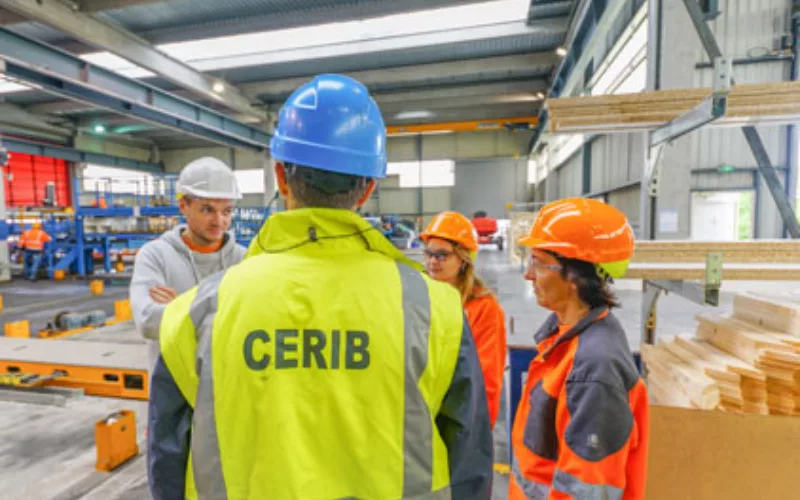
The Cerib, Industrial Technical Centre, with 184 employees and 5 locations (in Épernon, Lyon, Nancy, Rennes and La Réunion), operates throughout France, between testing and evaluation of products and materials, studies and research, standardization and certification, technical support, knowledge transfer, and has a training centre.
The Targets and Performance Agreement 2024-2027, signed with the FIB and the State, gives the Cerib a four-year roadmap to accompany the concrete industry towards the future and accelerate the major transitions of the construction sector:
- Increasing the impact of actions on the industrial fabric through a close relationship and effective targeted support
- Deploy innovations for mastering constructive solutions and successful environmental, energy and digital transitions
- Contribute to the performance of industry and construction through reference services
- Ensuring growth for the sustainability of a collective service
- Governing, engaging, sharing and disseminating for efficient piloting
The strong ambitions expressed in this contract are borne out by the reaffirmation of societal commitment and five values that drive the Cerib.

Circular economy
The Cerib accompanies actors upstream and downstream of the construction on operational subjects related to the circular economy:
- Integration of the principles of the circular economy upstream of the project, upstream of the design phase
- Diagnosis of resources, needs, actors in the territory
- preparation of roadmaps, adjustments of specifications to more ecodesign, inclusion of CVAs, DESFs
- support for the assembly of platforms, support for the development of suitable constructive systems, optimization of processes
- waste reduction, recovery of materials from recycling
- Consistent objectives with the normative and regulatory context
- Deployment of construction or deconstruction projects demonstrating good practice
- research and awareness of partners, development of skills of actors involved
- development of constructive systems, studies and analyses, prototyping
- aid for the establishment of production control
- Communication actions as projects progress
- Structured feedback, valorisation of the operations carried out, replication and amplification of ambition for new projects.
Environmental assessment
CERIB has a long history of Specific expertise in environmental assessment through the Life Cycle Analysis (LCA) methodology applied to construction products and works.
Major environmental issues, including climate and energy, have led in recent years to rapid changes in the demand for the construction market and the normative and regulatory framework, as evidenced by the RE2020 carbon thresholds for new buildings.
The environmental performance of products and works is now a key strategic element for companies.
The CVMA is applied at the scale of material, product, constructive system and work, both in the framework of the Centre's Studies and Research and for private services.
In particular, it enables:
- Declare the environmental performance of construction products through Environmental and Sanitary Declaration Sheets (EDS).
- To achieve an eco-design objective for a product or system through detailed knowledge of its environmental impacts (including carbon footprint) and identification of levers for improvement.